Key takeaways
- Make disclosure the overriding principle, then decide how much to ask, from whom, and what happens when someone says no.
- Hospitals run strict disclosure programs because of Stark, Anti-Kickback and private inurement exposure; most private groups need a policy that fits their own size and risks.
- The conflicts that matter most are surgery center ownership, ties to an outside designated health service provider, stakes in major vendors, and services agreements with a hospital.
- Disclosing a conflict does not mean it is forbidden; often the physician simply steps out of decisions that touch the other business.
- Write the consequences into your governing documents before you enforce, and avoid the selective enforcement trap.
Picture a 20-physician group practice. Every year, each of them gets a financial disclosure questionnaire. Out of the 20, 19 fill out the form, and one of them sends it back with a one-line reply:
“My outside investments are none of your business.”
If you are part of the group, you might find the response uncomfortable and maybe even unacceptable. But the truth is, that one physician might be right.
If that doctor owns farmland four states away, it cannot possibly affect the practice. So, why should they disclose it? And if the group pushes it, what exactly should it do? Withhold the doctor’s pay? Fire one of its best surgeons over a form?
I have seen physician groups wrestle with this for years. And there is no right or wrong answer or a one-size-fits-all policy. However, there are clear ways to get it wrong, and most of them come from copying the wrong model.
Begin With the Right Principle
Let me state this upfront: I am not arguing against conflict of interest policies. As doctors, you work in one of the most heavily regulated industries in the country. I once heard it said that healthcare is second only to nuclear energy. While I don’t know if that is true, it makes the point.
If we set the regulations aside, disclosure is good business. A culture of transparency is good governance. So the overriding principle in your organization should be disclosure. After that, focus on the right questions, like how much, from whom, and what happens when someone says no.
Understand Why Hospitals Go So Far
The next thing is knowing why hospitals go so far. Generally, physicians know about disclosure from the hospital side. As a medical staff member, you fill out the forms, and at an academic center, they are even more extensive.
But hospitals have good reasons for this. They face Stark and the Anti-Kickback Statute, and tax-exempt hospitals also face private inurement rules that can put their exemption at risk.
Stark is the big one; it is a payment statute. If a referral is prohibited, every claim that came from it must be refunded, with the potential for treble damages. And when Stark II added hospital inpatient and outpatient services to the list of designated health services, hospitals were put on the front lines.
Think about it: a hospital lives on inbound referrals, and essentially every one of them is a designated health service. No wonder the largest Stark cases involve hospitals, and no wonder their disclosure programs are gold standard.
However, a physician group is different. You still have Stark and Anti-Kickback exposure, but adopting a hospital-style financial disclosure program is neither practical nor necessary for most private groups.
Also, size matters. A five-doctor specialty group is not a 200-doctor multispecialty practice. Therefore, your policy should fit your actual risks.
The Risks You Should Look Out For
So what are those risks? I identified these four:
- Ownership in a Surgery Center: This is as much a business risk as a compliance one. If your group has invested millions in building or acquiring surgery centers, you need to know whether your partners are all in, or whether they also own a piece of the competing center down the road.
- A Financial Relationship With an Outside Designated Health Service Provider for Physical Therapy, DME, Imaging, Lab: Referrals to an outside DHS provider in which a physician has a financial interest are hard to fit within a Stark exception. The DHS provider may not take that seriously. But a large group, which is more likely to be on the government’s radar, has to.
- A Financial Relationship With a Major Vendor or Supplier: This is about corporate integrity more than regulation. Nobody cares who supplies your paperclips. But if a physician has an ownership stake in a company providing big-ticket services to the group, that affects your bottom line and, indirectly, your patient care.
- A Services Agreement With a Hospital: For most private groups, the biggest threat in any honest SWOT analysis is the hospital. If one of your physicians has a medical director agreement or management arrangement with a competing hospital, any business would want to know.
I should point out that disclosing a conflict does not mean the conflict is forbidden. Most times, a disclosed conflict is manageable, and sometimes, it calls for an independent review by a disinterested decision-maker.
Often it simply means the physician steps out of the room when the group makes a decision that touches that other business. The goal is not to punish anyone. It is to make sure decisions are made with the facts on the table.
What Happens When a Physician Objects
Now, back to when a physician objects. When they do, listen first, as they might have a legitimate point, especially if the form asks for every investment they own.
However, if your policy says disclosure is mandatory, you have to know what mandatory means before you enforce it. Are these reminders? A meeting with leadership? Withholding compensation? That is difficult under state wage payment laws. Termination? That sounds draconian and usually is. Or a forced sale of the physician’s interest in the group?
Any of these may be appropriate, depending on what is not being disclosed. What is not appropriate is making it up as you go. Whatever the remedy is, it belongs in your operating agreement, your employment agreements, and your policies. Do not wing it.
Additionally, watch out for what I call the selective enforcement trap. In year one, one doctor refuses, and nothing happens. In year two, two partners notice there were no consequences, and they refuse too. Compliance erodes. Then, when the group finally decides to act, the enforcement looks arbitrary or retaliatory. At best it is unenforceable. At worst, it invites a lawsuit.
What to Put in the Policy
So, what should a policy contain? I don’t have a magic answer for every doctor, but these are what I’d recommend:
- A duty to promptly disclose any material, practice-related conflict. It is partly the honor system, but the obligation is in writing.
- An annual certification, signed by every physician, that they have no material conflicts affecting the organization.
- More robust disclosure for leaders. Your managers, officers, and physician leaders owe fiduciary duties and make decisions for the group. It is reasonable to ask more of them.
- A confidential review channel. Much of the resistance is about privacy: doctors do not want every partner knowing their finances. Designate one compliance person to review disclosures and report concerns directly to the CEO, rather than circulating them to the whole group.
- Graduated consequences. A missed form is not the same as hiding an investment in a competing surgery center. Refusing to disclose unrelated passive investments is not the same as refusing to disclose a relationship with a DHS provider. Different risks deserve different responses.
- Separate discipline from remedies. Discipline addresses a doctor who is not being a good corporate citizen. Remedies ask a bigger question: should this person remain a partner? An excellent physician who will not accept the burdens of partnership may not be entitled to its benefits.
Ask This Question Before You Need the Answer
I’ll summarize all I’ve said with these three points:
First, transparency matters, but signing a document is not compliance. A policy that sits in a drawer does nothing. You have to carry it out.
Second, your policy should fit your practice and your governance. Do not draft it in a vacuum. Account for the group’s business dynamics and the rights and responsibilities already set out in your governing documents.
Third, before you adopt any mandatory rule, ask one question: what happens if someone refuses? It is far better to answer that question now, calmly and in writing, than to face it for the first time when one of your partners hands back a blank form.
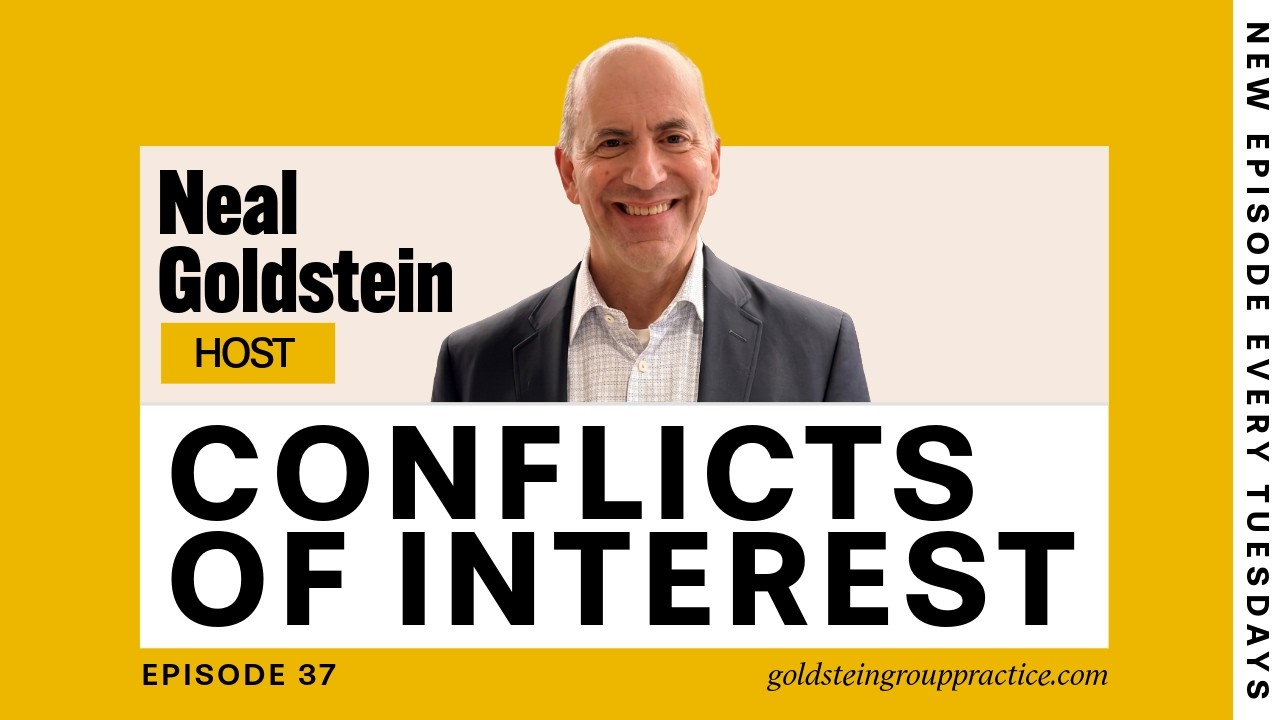
I shared more thoughts on this in my latest episode of Group Practice With Neal Goldstein. Click the link below to listen.
Episode 37: Conflicts of Interest
Frequently asked questions
Listen first, because the objection may be legitimate if the form asks for every investment. Then apply the consequences already written into the operating agreement, employment agreements and policies, rather than deciding on the spot.
Usually not. Hospitals face heavy Stark, Anti-Kickback and private inurement exposure. Private groups still carry Stark and Anti-Kickback risk, but their policy should fit their size and actual risks.
Ownership in a competing surgery center, a financial relationship with an outside designated health service provider, a stake in a major vendor or supplier, and a services agreement with a hospital.
When one doctor's refusal goes unaddressed, others follow and compliance erodes. When the group finally acts, enforcement looks arbitrary or retaliatory and can invite a lawsuit.
A duty to disclose material practice-related conflicts, an annual certification, more disclosure from leaders, a confidential review channel, graduated consequences, and a clear line between discipline and remedies.