The Hidden Costs of Owning Your Group Practice's Office Building
When I was a young lawyer about to make partner, I was excited about becoming an owner of the building my firm practiced in. I was young and starting to build wealth, so I was thrilled. Who wouldn’t want to be a real estate investor while becoming a partner in the firm where they worked?
However, over the years, I learned a lesson that informs the counsel I give to physician groups looking to own their medical office building. I tell them to slow down, as owning real estate where their practice operates is not what it is cracked up to be.
The economics are rife with challenges, and the excitement that makes it appealing is what clouds your judgment when deciding. But let me be clear about what I am saying, and what I am not.
I am not saying you should never own real estate. Instead, you need to do your due diligence and be guided by a principle that changes everything: the decision has to serve the practice, not the individual partners who just want to be landlords.
Why the Perfect Alignment Is a Myth
This is important because the moment you have more than one partner, you have more than one set of interests. Some partners in the group will be older, while some will be younger. Some will be high producers, while others are not.
Even if all of them have a piece of the real estate, their interests will never align perfectly because, as a landlord, you want high rent, and as the party paying the rent, you want it low. These two desires live side-by-side inside people, pulling them in different directions.
So the discipline has to be this: when weighing whether to buy the building your group will occupy, think first and last about what is best for the practice, never what is best for the partners as investors. Start there and end there, as it is the only way to keep a hard decision honest.
The One Good Reason to Own: Controlling Cost
Despite the lack of awareness, there is a good reason to own your group’s building. And it is not appreciation, but cost control.
Occupancy is one of the largest line items on a medical group’s finances. If you can own at a lower effective cost than renting, lock in a long-term mortgage at a favorable rate, and keep your operating expenses contained, you have taken one of your biggest expenses and flattened its trajectory.
So, instead of rent climbing yearly, you get a cost that stays roughly steady, with real estate taxes as the main variable. For a practice, that predictability is worth a great deal, because your single biggest investment is the practice itself, and controlling costs is how you set it up to thrive.
Another key reason is differentiation. If owning lets you build a best-in-class facility, designed around your patients and your workflow, in a location you could never lease into, that can be a real competitive advantage. But notice that both good reasons are about the practice. Neither is about your personal investment portfolio.
This is why I tell clients not to treat the building as an investment play. Instead, treat it as a fixed asset on your books, one that happens to lower your costs. Then structure it as a separate entity so it sits outside the reach of creditors.
But think of it as a tool that serves the practice, not as a single wealth vehicle riding on the practice’s back. Reframing it this way prevents most of the problems I’m about to discuss.
Where Ownership Quietly Works Against You
Typically, once you see a building as an investment instead of a fixed asset, a series of problems follows.
First, it makes the buy-in harder. Real estate appreciates and debts get paid down, so the equity climbs and a new partner buy-in swells with it. Picture a total buy-in of $500,000, of which $350,000 is the real estate. The young doctor considering your group does not see “a modest practice buy-in plus a real estate stake paid over time.”
What they see is a $500,000 albatross. Even if it is payable over the years, stretching it out can make it feel worse, like a debt hanging over their entire early career. So, in a system where buy-ins are already delicate, real estate makes them heavier.
The second reason is that it drains cash flow on the way out. When partners retire and redeem, an investment-minded real estate structure means they share in the appreciation, and the group has to fund it.
You can stagger, model, and manage it on a spreadsheet, but there is a difference between a tidy projection and actually writing the check yearly. It becomes a financial drain and a psychological one.
But the main issue lies in the fact that the return is often simply worse than it looks. A sharp real estate investor will model a grand slam for you: distributions, refinancing, and a big number at sale.
What this model leaves out is the cost to you as the practice. To make the investment sing, you have to set the rent high, as landlords want high rent. But the high rent is now your overhead, dragging on the practice side of the ledger. As such, when you net the two, the picture changes.
This is exactly the “lease versus own” analysis that businesses have run for decades. And the question I always come back to is: if owning were the obvious winner, why do so many sophisticated companies, small, medium, and Fortune 500 alike, choose to lease?
They lease because they have done the math, factored in the eventual sale value, and concluded that leasing keeps their occupancy costs lower. Any time owning feels like a no-brainer, ask yourself why successful businesses so often decide the opposite.
The Danger of Ownership Driving Decisions
The subtlest danger is that ownership drives decisions it has no business driving.
It causes you to take up more space than the practice needs because the bank requires it to service the mortgage. Now, the practice is carrying square footage to cover the monthly nut, not because the medicine calls for it.
You choose a location that is suboptimal against your competition because the real estate deal was attractive, when the hospital-employed group you compete with sits in an office building attached to the hospital campus. You are now three or four miles away.
You stay in a building longer than you should because, as an owner, it keeps throwing off good cash flow, even when the practice would be better served somewhere else. In each case, the investment influences the decision, while the practice absorbs the cost.
The Main Thing
To conclude, I’ll share a line from Stephen Covey that I think about often: the main thing is to keep the main thing the main thing.
As a doctor, your main thing is medicine, not being a real estate investor. You own and operate a medical business, and that is where your expertise and advantage lie. But the deeper cost of chasing a real estate portfolio on the back of your group is not really the dollars. It is your time and attention, the most precious and limited resources a busy physician has.
Every hour spent building a real estate holding is an hour not spent on the crown jewel: strategy for the practice, containing its costs, improving the patient experience, negotiating smarter arrangements with payers, expanding into ancillaries. That is the opportunity cost, and it is enormous, because you do not have much time to begin with.
Therefore, own if it is the best option after doing your due diligence. But treat the building as a tool rather than a trophy, and above all, always prioritize the practice.
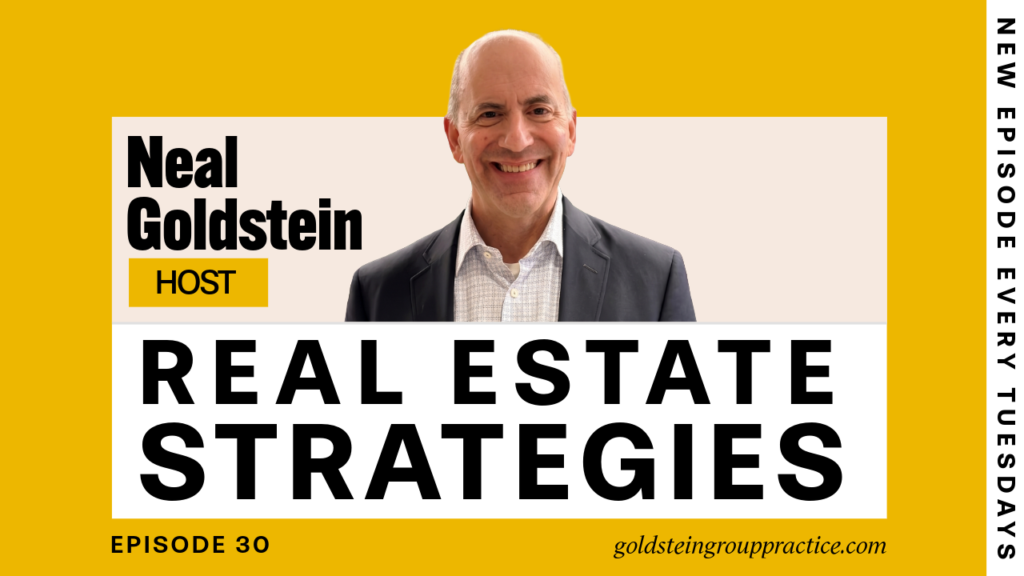
You can hear more of my thoughts on this in the latest episode of my podcast, Group Practice With Neal Goldstein. In a future episode, I’ll take on the other side of the coin: leasing. Click the link in the first comment to listen to this episode.
Neal T. Goldstein is a healthcare attorney and partner at Patzik, Frank & Samotny Ltd. (PFS), representing physician groups and individual physicians in corporate and transactional matters. This article is general commentary, not legal advice for any specific arrangement. The views expressed by Neal Goldstein and guests of this podcast are their own and do not necessarily reflect the opinions of PFS, nor should the views be attributed to any client of PFS.