The Myth That Doctors Are Bad at Business We Need to Retire
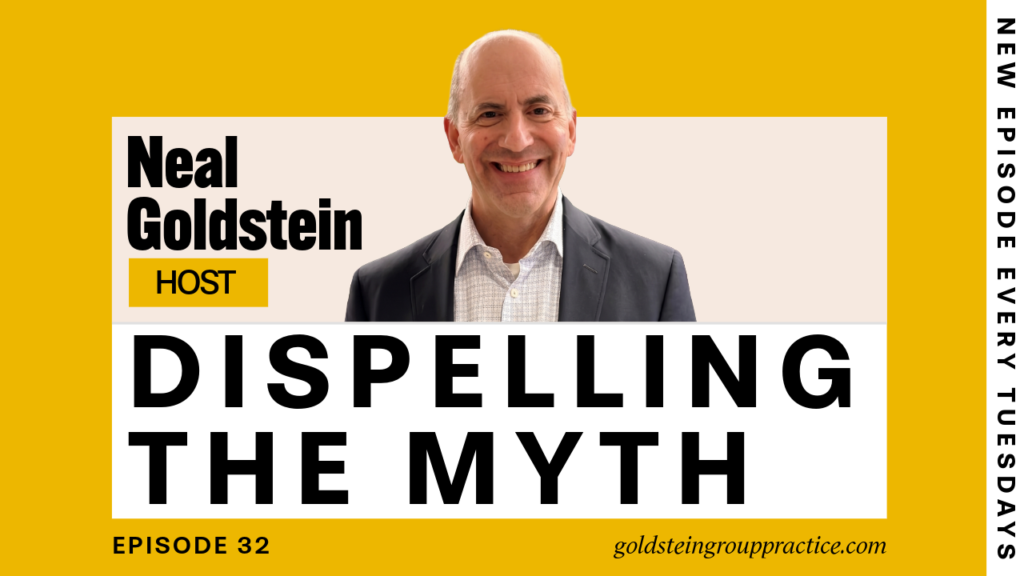
For as long as I have represented physicians, I have heard different versions of these words: doctors are bad businesspeople; they don’t understand business.
Those words have never sat well with me, partly because they are insulting and partly because they are wrong. Also, statements like that keep people from understanding each other. When a physician makes a decision that a non-physician finds baffling, they are tagged as “bad at business.”
This explanation is lazy, and the truth is far more interesting and useful. So, if you’re looking to work well with physician leaders, stick with me until the end. I’ll give you the real explanation.
The 10,000-Hour Reality
In his book, Outliers, Malcolm Gladwell popularized the 10,000-hour rule. It states that to truly master a skill, you have to practice it correctly for 10,000 hours. He used, as an example, the Beatles playing thousands of hours in Hamburg clubs, and Joe Flom building the foundation of Skadden Arps the same way.
You can quarrel with the exact number, but you cannot disagree with the underlying truth: mastery takes time, no matter how brilliant or how high your IQ is. Practice takes hours, and hours take years.
I saw it in my own field. When I started practicing law, associates were expected to bill at least 2,000 hours a year, and you became eligible for partner after five years. Five times 2,000 is 10,000. When I made partner, I remember feeling genuinely ready, because those hours trained me to run a deal and serve as outside counsel.
Now, let’s apply that to a physician. From kindergarten through fellowship, a doctor is in school and training for thirty-plus years, and the last decade of it, at least, is devoted entirely to one thing: becoming a physician, then a specialist, then a subspecialist.
Every one of those hours goes into mastering medicine. Some doctors even earn an MBA along the way, but be honest about the ratio: the time spent learning surgery and clinical judgment dwarfs anything absorbed in a business classroom.
So by the time a physician is out in practice, the 10,000 hours of business mastery simply have not been invested, because every available hour went into a harder and more important craft.
Also, once they are in practice, the highest and best use of their time—the thing that only they can do, and that gives them the most satisfaction—is seeing patients and operating. They are too busy being excellent physicians to accumulate a second mastery.
That is the whole explanation. When a physician makes a business call that a non-physician does not understand, it is not because they are bad at business. It is because business was never where their 10,000 hours went. As a result, it is not a character flaw; it is arithmetic.
The Doctors Who Prove It
The best evidence to support this explanation is the physicians who built great businesses.
I’ll give an example using my brother, Wayne, the founder of Illinois Bone and Joint Institute. He became the busiest joint-replacement surgeon in his region and succeeded in research and implant design.
Another notable example is Dr Richard Harris, a co-founder of UroPartners who helped grow it into ancillary services and launched ventures of his own, including a malpractice insurance company for urologists.
Both of them built real businesses and deserve to be called great businesspeople. But where did their success come from?
Every bit of it was, to borrow Scott Becker’s words, adjacent. Wayne and Dr. Harris’s success grew from their core competency. My brother’s ventures all derived from being an orthopedic surgeon. Dr. Harris’s all derived from being a urologist. Neither of them is claiming to be a real estate maven or a manufacturer of widgets. Their greatest success came from building outward from their main thing, not from leaving it behind.
The most striking case I know is Scott Becker (my friend since college, who came as a guest in a previous episode of my podcast, Group Practice With Neal Goldstein). On the surface, his two successes seem unrelated: a major healthcare law practice and Becker’s Healthcare, a media company.
But when you trace his career on a continuum, you’ll find that the media company is not a leap into a different business. It grew out of putting on conferences for clients in the medical space, which grew out of his healthcare law practice.
The media company, therefore, is an extension of his main thing, not a departure from it. And Scott, who I have to say is genuinely brilliant, did not skip the hours. He most likely put in 30,000 hours because he works like a machine.
Physicians Are Not Bad Businesspeople
So, it is time to retire the line that physicians are bad businesspeople because they are not. They are physicians, surgeons, and experts who spent their hours mastering the hardest thing they could have chosen, and built their best businesses adjacent to that mastery rather than away from it.
If you’re a physician, don’t think of yourself as bad at business, and don’t accept it when someone says it about another doctor. Accepting it diminishes what you actually are: a healer, a specialist, exceptional at a craft that took a lifetime to master.
The business can be built, deliberately, with the right people beside you and by extending outward from your strengths. But it starts with rejecting a myth that was never true.
You can listen to the full discussion on this on my podcast. It is the first in a short series on managing and governing a group practice. The link to listen is in the first comment.
Neal T. Goldstein is a healthcare attorney and partner at Patzik, Frank & Samotny Ltd. (PFS), representing physician groups and individual physicians in corporate and transactional matters. This article is general commentary, not legal advice for any specific arrangement. The views expressed by Neal Goldstein and guests of this podcast are their own and do not necessarily reflect the opinions of PFS, nor should the views be attributed to any client of PFS.