Key takeaways
- The 2020 Stark and Anti-Kickback rules ran to roughly 400 pages and added value-based enterprise exceptions, but few concrete, working models have emerged since.
- Targeted fixes to the provisions that have caused problems from day one would do more than a sweeping new framework.
- Letting surgeons be credited for both components of a low-cost X-ray would encourage trying it before reaching for an MRI.
- Crediting surgeons for surgery center facility margins would move cases out of hospitals at lower cost, because surgery itself limits overutilization.
- Waiving the same building requirement would let orthopedic groups own home health, protected by Stark's existing group practice safeguards.
In February 2021, I presented on Zoom to a physician specialty society explaining what was supposed to be a breakthrough in healthcare regulation. I opened with two snippets from the Federal Register. One was for the new Stark regulation, and the other was for the new Anti-Kickback regulation.
The Stark rule ran 191 pages; the Anti-Kickback rule ran 212. Small print, three columns per page. I wanted to break it down so the doctors on the Zoom would leave informed, and maybe inspired to build arrangements that lowered costs and improved outcomes.
I wasn’t very optimistic, but I thought, who knows? And more than five years later, I am still waiting to see what those rules made possible.
A Look at How We Got Here
The story began in June 2018, when HHS Deputy Secretary Eric Hargan announced what was called the Regulatory Sprint to Coordinated Care. CMS issued a request for information on Stark, and the OIG followed with its own request on the Anti-Kickback Statute and the civil monetary penalties law. More than 300 people and organizations submitted comments.
The proposed rules came out in 2019, and on November 20, 2020, CMS and OIG jointly issued their final regulations, mirroring each other whenever the two statutes allowed. I should point out that Stark is a strict liability payment statute, while the Anti-Kickback Statute is intent-based and quasi-criminal.
Among the changes were three Stark exceptions for value-based enterprises, covering:
- Full financial risk
- Meaningful downside financial risk to the physician
- Value-based arrangements generally
During my presentation, I could explain the theory behind each one and walk through the technical requirements. I could also give examples, but when I looked through the regulations and the preambles for concrete illustrations of what a practice could actually build, I didn’t find any.
Since then, I have attended seminars that walk through the elements of value-based arrangements. But I have not seen one that says, “Here is an arrangement that works, and here is why you should do it.” Compare that with bundled payments, which came with concrete models people could actually implement.
I’ll be honest that this is anecdotal; after all, I am one person. But I have looked.
Why It Is So Complicated
I am sure the people who designed these rules are very smart, and I am sure the framework works in theory. But I keep asking the same question: why does reform have to be this complicated? Why boil the ocean?
Why not identify the specific provisions of Stark and Anti-Kickback that have been causing problems from day one, and fix those? Some fixes would take an act of Congress. I understand that. But I have to believe that many could be handled within the regulations themselves.
I know where those problems are because I have lived them for 25 years alongside my orthopedic clients. So I’ll make my case through one patient’s journey: one specialty, three stops, and three targeted fixes.
Stop One: The X-Ray
An X-ray is inexpensive. I have seen figures around $35. The technology has moved from film to digital, and for an orthopedic surgeon it is still an extraordinarily useful diagnostic tool. But not for everything.
There are clear indications for MRI and CT in many situations.
Yet CMS takes the position that, for purposes of compensating physicians in a group, an X-ray is treated like any other diagnostic imaging, including MRI and CT. The surgeon can be credited with the professional component, not the technical component. I disagree with that position, though to my knowledge it has never been litigated.
Does that rule actually change behavior? Does a surgeon decide not to order a $35 X-ray because only part of it counts toward compensation? Almost certainly not.
So imagine CMS simply said: you can be credited for both the professional and technical components of an X-ray. It won’t blow up your group practice exception. It won’t send you into the Stark self-disclosure protocol. It isn’t a big deal.
That would nudge physicians in exactly the right direction. Try the X-ray first, before reaching for the MRI. Why not reward that? And it would not even need a formal regulation. A clear statement of position would do it. It would also send a message that physicians, many of whom are frustrated with CMS and frankly a little paranoid about it, rarely hear: we hear you.
Stop Two: The Surgery Center
Surgery centers are an Anti-Kickback question, not a Stark question, but the Regulatory Sprint covered both.
Under the one-purpose test, a physician’s share of ambulatory surgery center (ASC) profits could be viewed as remuneration for referrals. The ASC safe harbor answers that with its one-third tests, built on the idea that the surgery center is an extension of the surgeon’s own practice. That works for individual surgeons. It does not work for large group practices that want to own their site of service.
Groups that build ASCs today usually take a conservative route. They offset the profits against the group’s overhead, or they distribute them evenly among all physicians or all surgeons, rather than by utilization. OIG Advisory Opinion 08-08 found the latter approach to be low risk even though it didn’t fit the safe harbor, and it has become fairly accepted practice.
I would go further to say, give the surgeon credit for utilization. Credit the facility fee, and charge the surgeon the cost. If the facility payment is $10,000 and the cost is $6,000, let the surgeon be compensated for that $4,000 margin, or 90% of it.
The obvious objection is overutilization. But Stark and Anti-Kickback were designed to police passive income, the arrangements where physicians make money while they sleep. Ordering an MRI, physical therapy, or a lab test takes almost no time out of a doctor’s day, which makes those services ripe for overutilization.
Surgery is different. The surgeon personally performs it. A mid-level can’t do it, and a resident shouldn’t. A typical orthopedic surgeon spends two or three days a week in the OR, and every one of them I know is already extremely busy. There are only so many hours in a day.
If a surgeon has a fixed number of cases each year and is financially motivated to do them in a surgery center instead of a hospital, who loses? The patient gets the same quality outcome, while the payer and the healthcare system pay far less. So I say bring it on. (And while I’m on my soapbox, Illinois shouldn’t have a certificate of need law for surgery centers either.)
Stop Three: Recovery at Home
Under Stark’s in-office ancillary services exception, an orthopedic group can provide physical therapy, own an MRI, dispense DME, and dispense drugs. CMS clearly sees the value of keeping those services within the group for continuity and quality of care.
But practically speaking, the group can’t own home health. The reason is the same building requirement, which a home health service, by its nature, will never meet. In all my years, I have never seen a home health arrangement fit within a Stark exception.
I do understand the government’s wariness. When I taught my Stark class at Loyola, I asked our guest speaker, an assistant U.S. attorney in Chicago, what was on the government’s radar. Her answer was home health, which she said was rife with fraud and abuse. I recall her saying something like there were more home health licenses in Cook County, Illinois than in the entire state of New York.
But bringing home health inside an orthopedic group addresses that concern rather than worsening it. Same electronic health record. Same employees. Same supervision. Fewer redundancies and, I would expect, fewer readmissions.
You can’t get more integrated than a group practice. Home health is a logical extension of physical therapy. It works when you put safeguards in place, and what better safeguards are there than the other requirements of the Stark in-office ancillary services exception and the group practice definition? So waive the same building requirement for group practices owning home health. This shouldn’t be that difficult.
You Can Tell Me I’m Wrong
These three stops are the journey: an X-ray, a surgery, and a recovery. Three places where the current rules get in the way of better, less expensive care, and where the value-based enterprise exceptions do not provide the relief that is actually needed.
After all I’ve said, my argument is simple: pursue targeted reform and fix the things everyone knows are broken. These changes would create better alignment between physicians and the government, improve quality and access, and bring down costs.
Finally, if you have seen a value-based enterprise that is working, one that has driven down costs and improved outcomes, I would love to hear about it. If you can demonstrate it, I may even invite you to my podcast, Group Practice With Neal Goldstein.
In the meantime, click the link below to listen to the latest episode.
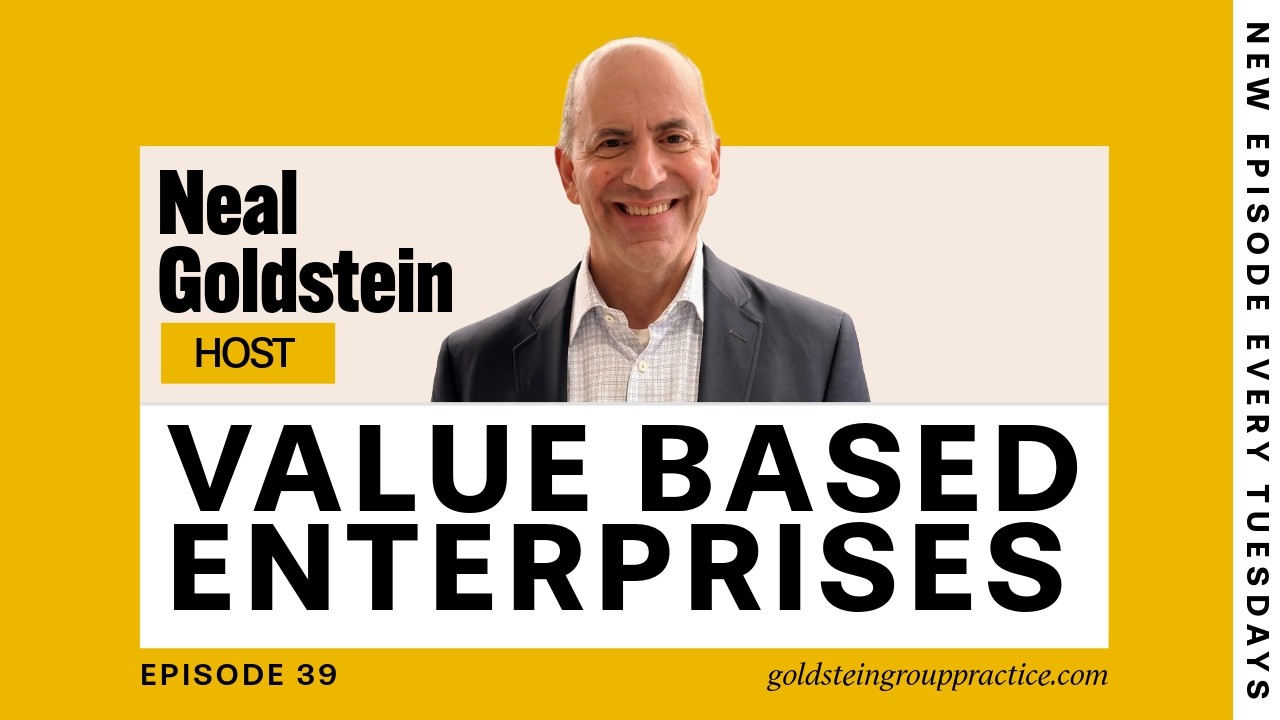
Episode 39: Value Based Enterprises
Frequently asked questions
Three exceptions added in the 2020 regulations, covering value-based enterprises with full financial risk, those with meaningful downside financial risk to the physician, and value-based arrangements generally.
An HHS initiative announced in June 2018 that led CMS and the OIG to issue coordinated final Stark and Anti-Kickback regulations on November 20, 2020.
Under CMS's position, the surgeon can be credited with the professional component but not the technical component. Neal Goldstein argues CMS should allow credit for both.
Conservatively: by offsetting the profits against group overhead or distributing them evenly rather than by utilization, an approach OIG Advisory Opinion 08-08 found to be low risk.
The in-office ancillary services exception requires services to meet a same building requirement, which home health by its nature cannot satisfy.